𝐘𝐨𝐮𝐭𝐡 𝐆𝐫𝐨𝐮𝐩𝐬, 𝐓𝐫𝐚𝐝𝐢𝐭𝐢𝐨𝐧𝐚𝐥 𝐑𝐮𝐥𝐞𝐫𝐬 𝐃𝐞𝐦𝐚𝐧𝐝 𝐅𝐚𝐢𝐫𝐧𝐞𝐬𝐬 𝐢𝐧 𝐏𝐢𝐩𝐞𝐥𝐢𝐧𝐞 𝐒𝐮𝐫𝐯𝐞𝐢𝐥𝐥𝐚𝐧𝐜𝐞 𝐂𝐨𝐧𝐭𝐫𝐚𝐜𝐭
- by Kalaboy, HSN, River State
- about 9 hours ago
- 112 views

Youth groups have staged protests over what they describe as their exclusion from a National Assembly hearing, while a fresh group of traditional rulers has joined calls for a review of the current pipeline surveillance arrangement.
The Ijaw Youth Council, National Youth Council of Ogoni People, and Ogoni host communities youth associations say they were not invited to the National Assembly roundtable on pipeline surveillance. This comes as some traditional rulers in the state push for the decentralization of the contract, contrary to claims by the committees.
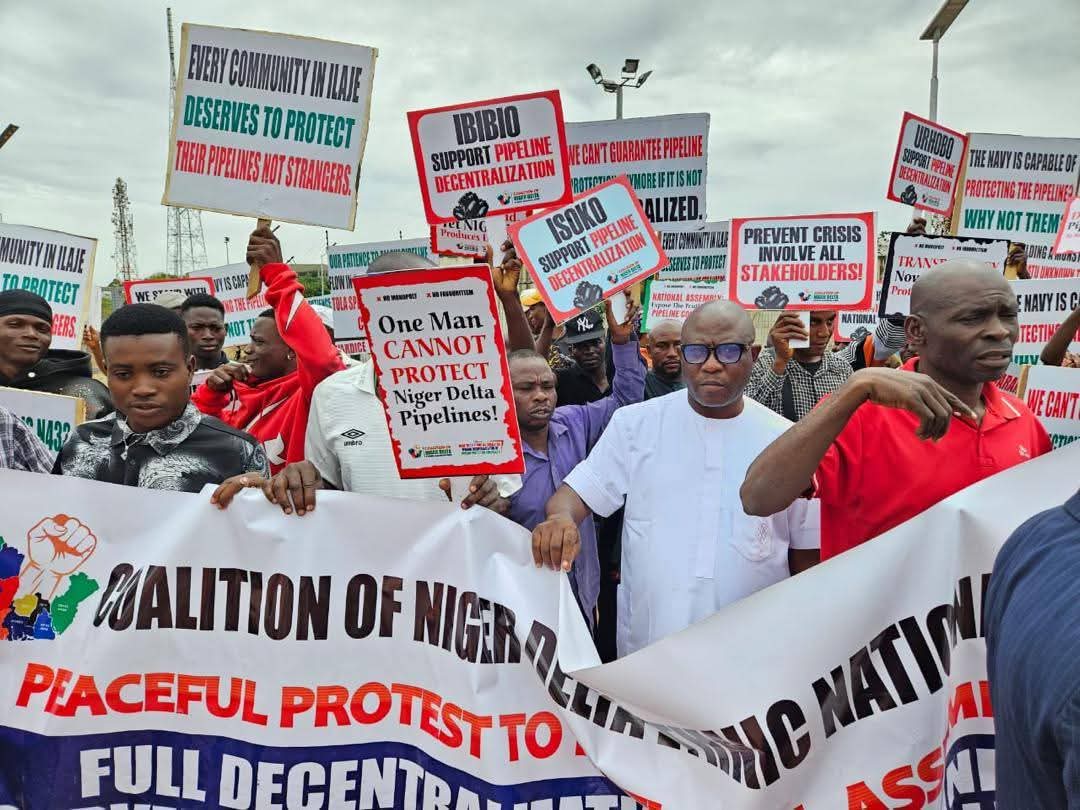
The Ijaw Youth Council (IYC), the National Youth Council of Ogoni People (NYCOP), and the Ogoni host communities youth association staged a peaceful protest to express their concerns over decisions reached at the National Assembly hearing on pipeline surveillance and crude oil theft.
Marching peacefully through Gokana Local Government Area of Rivers State, the groups carried placards with messages highlighting their grievances. Their leaders insisted they were never invited to the hearing, disputing claims made by the joint committee.
The groups have renewed their demand for the decentralization of pipeline surveillance to the states to ensure fairness. They also called on the Presidency and the National Security Adviser to step in.
They argued that the federal government should urgently decentralize the pipeline surveillance contract, which they say has been monopolized, in order to promote equity and fairness. They also pointed to recent discussions in the National Assembly, following petitions sent to both chambers, alleging that the current arrangement has encouraged organized crude oil theft. They added that the Assembly, which has oversight responsibility, should properly investigate the matter.
However, they expressed concern that the National Assembly Joint Committee reportedly invited only one group to present its report, a move they believe defeats the purpose of the petitions.
While reaffirming their support for the President, the groups urged him to show commitment to development by ensuring that the pipeline surveillance contract is decentralized.
Meanwhile, days after some traditional rulers backed the current arrangement, another group from Okochiri Kingdom called on the President to divide the contract. They said this would allow indigenous communities to play a more active role, arguing that the existing system leaves out local stakeholders.
They specifically appealed to President Bola Ahmed Tinubu, urging him to take decisive steps toward decentralizing pipeline surveillance contracts in the Niger Delta.
According to them, justice, equity, and fairness must guide the awarding of such important national contracts.
The growing calls for a review of the pipeline surveillance system point to an increasing divide among stakeholders in Rivers State.










0 Comment(s)